Plumber Near Hamilton
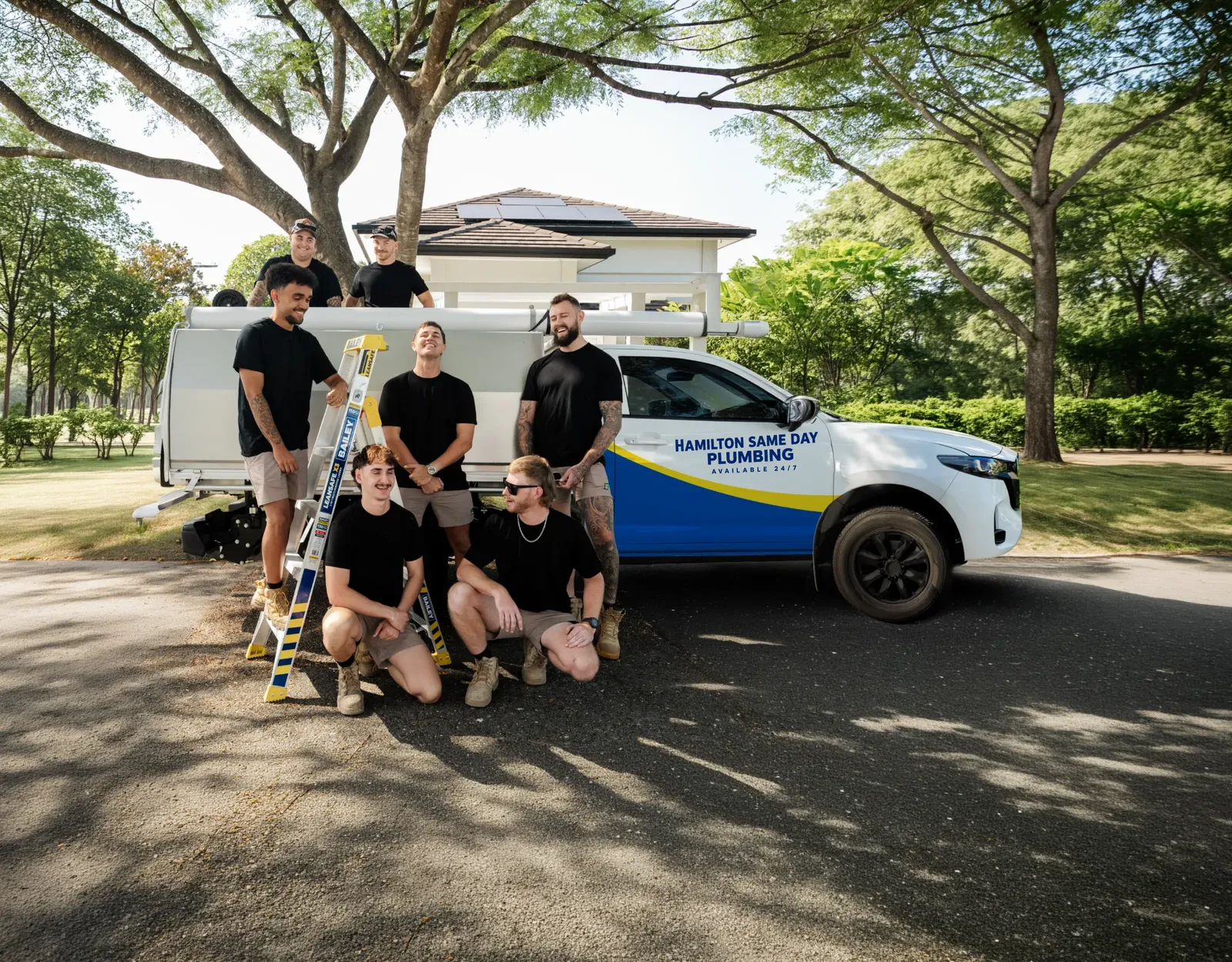
The right plumber near Hamilton knows the patch, because what a licensed plumber expects to find changes with the building's era, its soil and the utility's boundary line. Hamilton Same Day Plumbing works Hamilton itself plus the suburbs around it: Ascot, Eagle Farm, Murarrie, Bulimba, Newstead and Albion.
If we're late, $100 comes off your bill

- Licensed and InsuredEvery job done by a licensed plumber. QBCC No: 15024607
- Fixed Quote FirstFlat-rate pricing, agreed before any work starts
- Lifetime Labour WarrantyBacked by our Fix-It-or-It's-Free guarantee (T&Cs apply)
- $0 Call-Out FeesNo extra charge for nights, weekends or public holidays
Eagle Farm and Murarrie each have a page of their own. Every other difference below comes back to one idea: where a house sits and when it was built decides what goes wrong with it.
Pipe Materials by Building Era Across Suburbs
When a street was built sets the pipe materials under it, so the likely repair changes with the age of the homes. Two building eras sit side by side in this suburb: pre-1940 and 2000s-present, with very little between.
On Toorak Hill and Annie Street, the old villas and estates carry their original galvanised iron water lines, often concealed behind newer wall linings after renovation. Galvanised steel rusts from the inside, narrowing flow years before it splits.
The apartment buildings on the old wharf land at Northshore went up in the modern era, so their water lines are contemporary materials from the start. One caution applies across the older stock: copper joints done before 1989 can carry lead-based solder, which makes the age of a water service worth checking during major work.
The neighbours differ again. Eagle Farm's housing is mostly 1940s-1960s and later, and Murarrie mixes post-war homes in weatherboard and fibro with newer brick-veneer and render. Our older home plumbing page covers the pre-war stock, and water pipe repairs explains the faults each material brings.
Houses, Units and Townhouses Need Different Plumbing Care
In a house, the owner holds every pipe. In a unit block or townhouse estate, the maintenance splits between the individual owner and the body corporate. Census figures make the split stark here: 2,921 flats and apartments, 894 separate houses and 337 townhouses at the last count.
The body corporate's list covers the shared lines: risers, main drains and anything serving more than one lot. The individual owner's list covers a pipe only when it serves just that home, sits within the lot's boundaries and passes through no wall, floor or ceiling shared with a neighbour.
One wrinkle catches people out. A hot water unit that serves a single lot stays the responsibility of that lot's owner or occupier, even when the unit sits on common ground.
Those service cupboards are common here, because riverside unit blocks rely on storage tanks packed into small spaces. Getting one replaced means shutting down water through shared risers first, then working within building rules.
Stacked bathrooms add another layer: a split hose in one apartment can reach several others before anyone finds it. Our unit and townhouse plumbing page steps through the whole split.
What Shifting Ground and Heavy Rain Do to Pipes
Ground conditions and storm exposure set how hard buried pipework gets worked, and both shift sharply between these suburbs. The soil here runs to fill, alluvial mud and shale, and each behaves differently around a pipe.
Reactive clay grows in the wet season and tightens in the dry, dragging on footings and the lines buried beside them. The filled wharf flats are a separate case: estuarine mud under the old industrial land keeps groundwater near the surface year-round, so any trench near the river edge needs dewatering before pipework goes in.
Storm exposure matters too. Council's storm tide layer reaches across much of the low ground, and a rising tide can block the drainage outlets during a downpour, leaving rain to pool in the pits and gullies instead of clearing.
Storms bring a gas warning as well. If gas is smellable after floodwater, call 000, and report any damaged meter, regulator or cylinder to your gas supplier. For water-side trouble, our leak detection page explains how hidden leaks get found, and the emergency plumber page lists the faults that can't wait for a booking.
Council and Utility Boundaries Explained
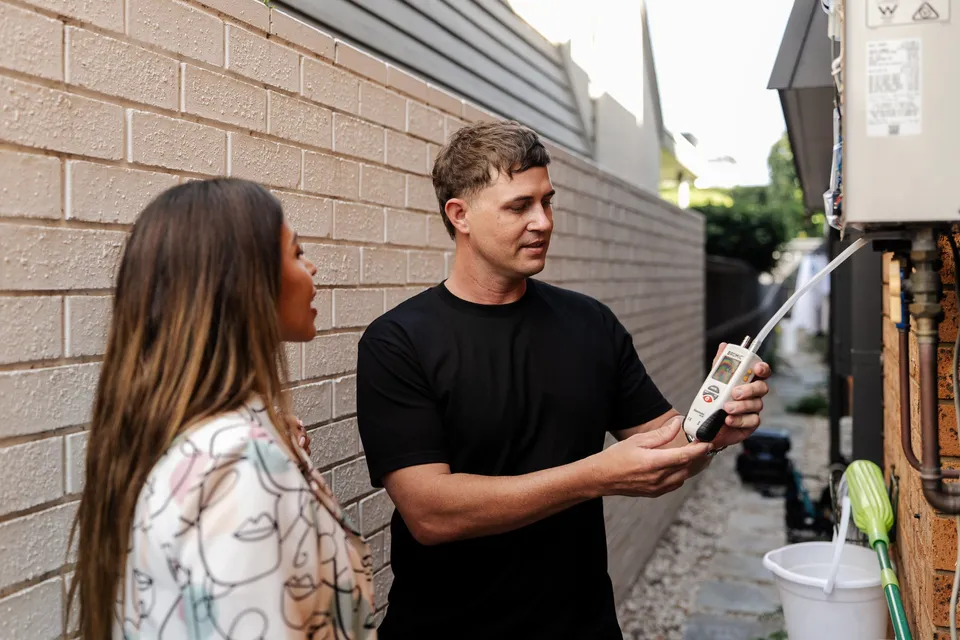
Urban Utilities owns everything up to and including your meter: the street main, the sewers and the meter itself. Everything past that meter on your land is the owner's to maintain, and faults there are a plumber's job.
Your water meter sits in a small below-ground box, flush with the ground, in the verge between the road and your boundary. Two pressure figures frame what comes out of it.
Supply at the meter is at least 210 kPa, and the network is designed to a maximum of 550 kPa, though readings above that do occur in some low-lying suburbs.
The council side is separate. Brisbane City Council deals with approvals: it assesses applications for plumbing work, issues permits and inspects the finished job. Licensing statewide is the QBCC's responsibility.
Council also holds records of as-constructed hydraulic plans for multi-dwelling and commercial sites, which map the private in-ground sanitary drains within the property. Those plans are a useful record to ask about before major drainage work.
Eagle Farm and Murarrie on Our Run
Two neighbours get their own pages, because each brings conditions worth knowing before you call. Hamilton Same Day Plumbing works both regularly.
- Plumber in Eagle Farm: housing from the 1940s onward on alluvial soil and fill, with Urban Utilities on the same mains network as Hamilton.
- Plumber in Murarrie: post-war homes in weatherboard and fibro next to newer brick-veneer, on alluvial fill and shale, and closer to the bay's salt air than the hill streets here.
Ascot, Bulimba, Newstead and Albion sit on the same run. Ring and ask, because a street address is the fastest way to confirm cover.
How Booking a Plumber Works
- 1

Get in touch
Call (07) 3523 6484 or send a quick message about the job in Hamilton, and we'll ask what we need to know.
- 2

We come to you
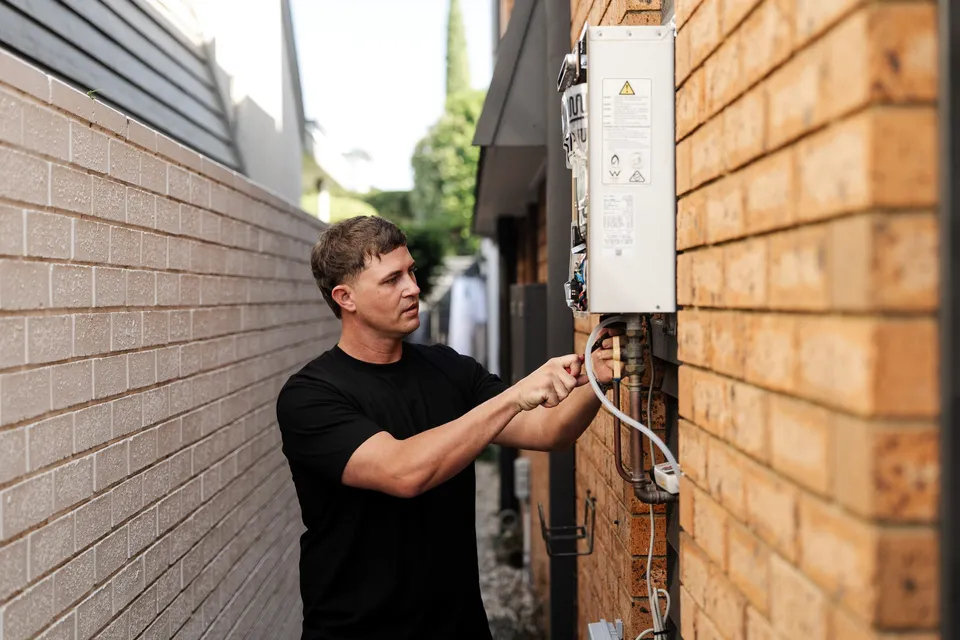
We arrive, find the fault where it sits, whether that's a hill villa, a Northshore apartment or a place a few suburbs over, and talk you through the fix.
- 3
Sign off the quote
You'll see a fixed quote before any work starts, with flat-rate pricing and no hidden fees. The job starts when you're happy with it.
- 4

Pay once it's done
Pay by card or EFTPOS on site after the work's finished, or choose Fix now, pay later.
Plumbing job in Hamilton?
$0 call-out fees, available 24/7, and same-day where we can.

Why People Around Hamilton Call Us
No Call-Out Fee, Ever
There are $0 call-out fees on every Hamilton job, with no extra fee for nights, weekends or public holidays.
Price Agreed Up Front
A fixed quote before any work starts means flat-rate pricing and no hidden fees on your invoice.
Lifetime Labour Warranty
Our Fix-It-or-It's-Free guarantee covers you (T&Cs apply), labour has a lifetime labour warranty, and if we're late, $100 comes off your bill.
Licensed Local Plumbers
QBCC No: 15024607 covers our licensed plumbing and gasfitting. Every job is done by a licensed plumber, and we're licensed and insured.
Questions About Our Service Area
Call (07) 3523 6484Which suburbs near Hamilton do you cover?
Hamilton plus the neighbours: Albion, Newstead, Bulimba, Murarrie, Eagle Farm and Ascot. Eagle Farm and Murarrie have their own pages with notes on those suburbs. Ring (07) 3523 6484 and we'll confirm your address over the phone.
Is there a call-out fee for suburbs near Hamilton?
No, there are $0 call-out fees on every job, and no extra charge for nights, weekends or public holidays. You see the price in writing before work begins, so nothing is settled after the tools come out.
Is water pressure different in the lower-lying streets?
Yes, readings above the 550 kPa design maximum do occur in some areas, mostly low-lying suburbs. The minimum at the meter is 210 kPa. High pressure is one reason pressure-limiting valves wear out early.
Who maintains shared pipes in units and townhouses?
The body corporate looks after the shared lines, such as risers and main drains serving every lot. The lot owner handles a pipe that serves only their home, sits within its boundaries and passes through no shared wall, floor or ceiling.
Which water utility supplies Hamilton?
Urban Utilities. It looks after the public mains, the sewer and your meter, and everything on your side of that meter is yours to maintain. Repairs on your side are a plumber's job, not the utility's.
What if my suburb is not on the list?
Call (07) 3523 6484 or use the contact form with your address, and we'll say straight whether that street is on the run. We'd rather confirm on the phone than leave you guessing.

Ring Us About Your JobWe'll call you back.
Ring (07) 3523 6484 and tell us what's wrong. You get $0 call-out fees, a fixed quote before any work starts and same-day where we can, 7 days a week.
Current offers:
- $80 off a tap replacement
- $60 off your first service
- $99 off blocked drains
- $220 cashback on hot water installs
T&Cs apply. Mention this offer when booking.
To claim your $0 call-out fee, call (07) 3523 6484 today.